
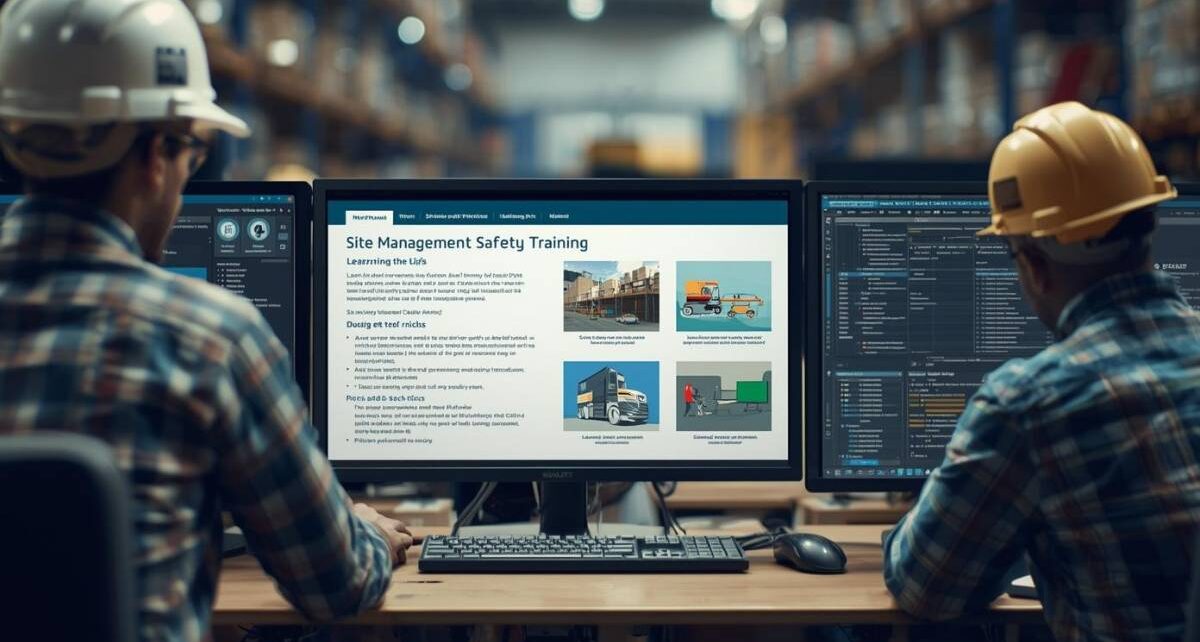
The shift towards digital learning in construction management
For decades, the standard way to progress into site management involved clearing a week in your diary, driving to a training centre, and sitting in a windowless room with a dozen other people. While that traditional approach served the industry well, the way we work and learn has changed dramatically. Today, more professionals are finding that taking the SMSTS online is not just a convenient alternative, but often a superior way to gain the qualifications needed for high-level site supervision.
The Site Management Safety Training Scheme (SMSTS) is a cornerstone of the UK construction industry. It is widely recognised as the gold standard for site managers, project managers, and supervisors who need to demonstrate a thorough understanding of health, safety, welfare, and environmental issues on site. Transitioning this intensive five-day programme to a virtual environment was a significant move by the CITB, and it has opened up the qualification to a much wider range of busy professionals who might have previously struggled to find the time for traditional attendance.

How the virtual classroom actually works
There is a common misconception that an online course is just a series of pre-recorded videos and multiple-choice quizzes that you click through in your own time. When it comes to the SMSTS online, that couldn’t be further from the truth. These courses are delivered via live, tutor-led sessions using platforms like Zoom or Microsoft Teams. You are part of a real-time classroom, interacting with the instructor and your fellow students just as you would in person.
The structure typically follows the same rigorous format as the physical course. You will engage in group discussions, participate in breakout room exercises, and work through case studies. This interactive element is crucial because site management isn’t just about memorising regulations; it is about the practical application of those rules in complex, ever-changing environments. Being able to debate a risk assessment or discuss a site layout with peers from different sectors of the industry adds a layer of depth to the learning experience that you simply don’t get from a textbook alone.
The practical benefits of remote learning
The most immediate advantage of choosing to study for your SMSTS online is the massive reduction in logistical stress. Construction projects are demanding, and being away from the site for five consecutive days is often the biggest hurdle for aspiring managers. By removing the need for travel, you save hours of commuting time and significant costs related to fuel, parking, or overnight accommodation.
- Flexibility across the UK: You aren’t limited to the training providers in your local town. You can choose the best-rated trainers regardless of where they are based.
- Comfortable environment: Learning from your own office or home can often lead to better focus and retention, provided you have a quiet space.
- Digital resources: Most online courses provide digital versions of all necessary publications and forms, making it easier to organise your study materials and reference them later on the job.
- Environmental impact: Reducing the need for dozens of people to drive to a central location every day for a week significantly lowers the carbon footprint of the training process.
What you will learn during the course
The curriculum for the SMSTS online is identical to the classroom-based version. It is designed to cover the full spectrum of a site manager’s responsibilities under the current UK legislation. The primary focus is on the Health and Safety at Work Act, but it delves much deeper into the specific regulations that govern modern construction sites.
You will spend a significant amount of time looking at the Construction (Design and Management) Regulations, commonly known as CDM. Understanding these is vital for anyone in a management position, as they outline the legal duties of every party involved in a project. The course also covers high-risk activities such as working at height, demolition, and confined spaces. Beyond the physical risks, there is an increasing emphasis on the ‘softer’ side of site management, including occupational health, mental health awareness, and how to foster a positive safety culture among the workforce.
Technical requirements for a smooth experience
To ensure you get the most out of your SMSTS online experience, there are a few technical prerequisites. Because the course is invigilated and highly interactive, you cannot simply hide behind a black screen. Most providers require you to have a functioning webcam and microphone that remain on for the duration of the sessions. This ensures the integrity of the course and allows the tutor to gauge engagement levels.
- Stable internet connection: You will be streaming live video for several hours a day, so a reliable broadband connection is essential.
- A suitable device: While you might be able to join via a tablet, a laptop or desktop computer is highly recommended for viewing detailed site plans and participating in written exercises.
- Quiet workspace: You need a location where you won’t be interrupted by site noise or household distractions, allowing you to participate fully in group work.
- Identification: You will need to show valid photographic ID to the camera at the start of the course to verify your identity for CITB certification.
Preparing for the final assessment
The final exam is often the part that causes the most anxiety for delegates. When taking the SMSTS online, the exam is conducted remotely but under strict invigilation conditions. Usually, this involves a digital exam paper that you complete within a set timeframe while the tutor monitors the group via video link. The exam consists of multiple-choice questions and a few short-answer questions that require a bit more detail.
Preparation is key, but the way the course is structured helps build your confidence day by day. Throughout the five days, you will be constantly applying the knowledge through practical exercises and mock scenarios. By the time you reach the final afternoon, the exam usually feels like a natural progression rather than a sudden hurdle. It is also worth noting that your performance during the week—your participation in group projects and your engagement with the material—often forms part of the overall assessment, so staying active in the virtual classroom is just as important as the final test score.

Choosing a provider that understands the industry
Not all online training is created equal. When you are looking to book your course, it is important to choose a provider that has a deep understanding of the construction sector and a track record of delivering engaging virtual content. A good provider will offer support before the course starts, ensuring your tech is set up correctly and that you have all the digital manuals you need to succeed. They should make the process of obtaining your CITB certificate as seamless as possible, handling the administration so you can focus on the learning.
The certificate you receive after successfully completing the course is valid for five years. It is a powerful addition to any CV and is often a mandatory requirement for managing sites for major contractors and developers. Whether you are an experienced supervisor looking to take the next step or a project manager needing to renew your credentials, the transition to online learning has made it easier than ever to maintain your professional standards without disrupting your work-life balance.

A culture and lifestyle columnist with a news lens. Sienna blends real-time reporting with commentary on arts, entertainment, and shifting social norms to highlight the human side of the headlines.